


What Really Matters When Developing a Mobile App?
Today, mobile applications have become one of the key digital channels for interaction between businesses and users. According to international analytical studies, mobile traffic consistently dominates overall internet usage, and users spend significantly more time in apps than in mobile browsers. This is driven by higher performance, more convenient interaction, and the ability to deliver a high level of personalization.
For businesses, a mobile application is not merely a technological solution but a strategic tool that enables the development of long-term customer relationships and the creation of new revenue streams.
The rapid growth of mobile traffic also confirms the long-term trend of users shifting to mobile environments. The volume of mobile data consumption increases every year, driven by the expanding range of digital services people use on a daily basis — from finance and eCommerce to fitness and education.

The growth of mobile traffic directly influences business strategies. The more time users spend in mobile environments, the more important it becomes to develop proprietary applications that provide fast access to services, personalized experiences, and continuous interaction with the brand. Today, a mobile application represents a key touchpoint between a business and its customers.
Based on the practical experience of the Codeska team in building digital products, let us consider the key aspects businesses should take into account before launching a mobile application.
1. Clear strategy, market understanding, and target audience
Mobile app development should begin not with the choice of technologies, but with the strategic definition of business objectives. Product success depends directly on how deeply the team understands the target audience, their needs, usage context, and the problems they are trying to solve. At the initial stage, it is recommended to conduct a comprehensive analysis covering the following areas:
- Target audience — segmentation of users by demographic, behavioral, and professional characteristics; assessment of digital literacy, technical proficiency, and interaction habits with similar products; identification of potential barriers and pain points that affect product adoption.
- Business problem and product value — clear formulation of the core problem the application addresses, as well as its unique value proposition (UVP) for both users and the business; evaluation of how the product integrates into existing business processes and how it creates competitive advantages.
- Key usage scenarios (user flows) — mapping the main paths of user interaction with the product; defining priority features, optimizing UX/UI, and embedding scenarios into the product to ensure an intuitive and seamless experience.
- Success metrics and analytics — formalization of KPIs to measure product effectiveness, including conversion, retention, engagement, interaction frequency, and monetization metrics; building an analytics system to track user behavior and adjust the product strategy accordingly.
- Market context and competitive environment — analysis of existing market solutions, identification of competitors’ strengths and weaknesses, and assessment of user behavior trends and technological innovations that may affect product development.
- Risks and constraints — early identification of technical, regulatory, and resource limitations that may influence implementation and scaling; preparation of a risk management plan to minimize negative impact on the product.
Such a structured approach enables development teams to align business goals with user needs, make informed decisions at every stage of development, and establish a foundation for efficient scaling and gradual feature expansion without sacrificing stability or control over resources.
2. Technology stack selection
Choosing the development approach—native, cross-platform, or hybrid—is a strategically important decision that affects product performance, time to market, and long-term maintenance costs.
- Native development provides maximum performance and full access to device capabilities, which is critical for resource-intensive or highly interactive scenarios.
- Cross-platform technologies allow teams to work with a single codebase for multiple platforms, reducing development time and budget. They are well suited for rapid launches and for supporting several operating systems simultaneously.
- Hybrid solutions are often used for MVPs when it is necessary to test a concept in the market with minimal investment while preserving the option for future scaling.
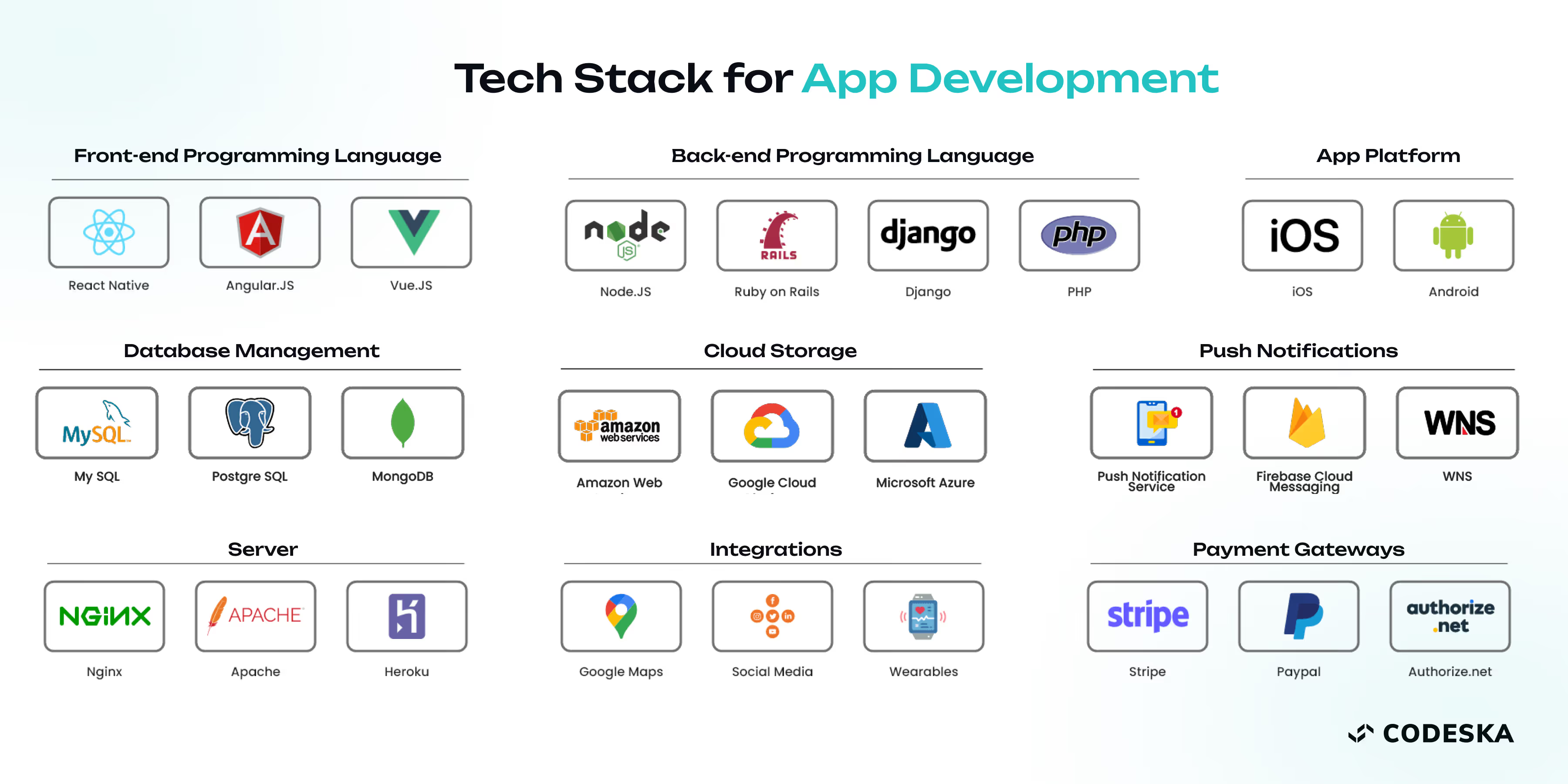
The choice of an optimal technological approach should be driven by the product’s strategic business goals, the complexity of its functionality, and a long-term vision for growth. Architectural decisions made at the early stages directly affect time to market, application stability, and the cost of future maintenance and scaling. The Codeska team evaluates these factors holistically, helping to strike a balance between a fast MVP launch and building a reliable technical foundation for future growth.
3. UX/UI as a key factor in user retention
Even a technologically advanced product will not succeed without a well-designed user experience. Effective UX in mobile applications is based on a combination of usability, interaction speed, and visual consistency, all of which directly influence user engagement and retention. The core principles of strong UX for mobile platforms include:
- Intuitive navigation, enabling users to quickly find required features without additional instructions.
- A minimal number of steps to complete key actions, reducing cognitive load and interaction barriers.
- Fast loading of screens and content, supporting a positive user experience and a strong first impression.
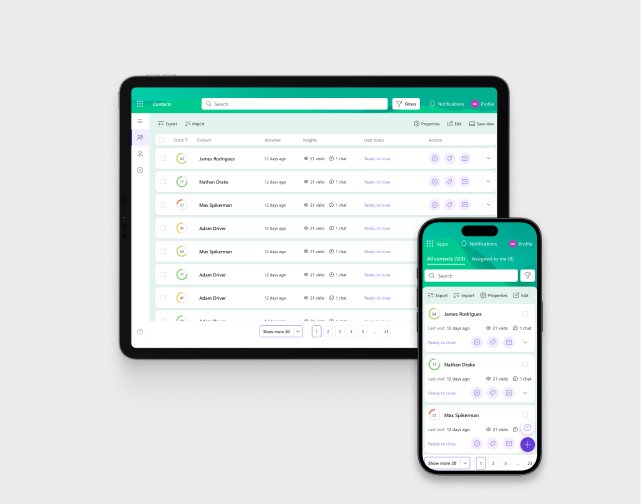
- Adaptability to different devices and screen sizes, ensuring stable performance across platforms.
- Visual consistency of the interface, creating a clear, harmonious, and aesthetically pleasing experience.
- Contextual optimization, since mobile users often interact with applications “on the go,” making speed and simplicity critical for retention.
An example of applying these principles in practice is the GoGym case. The app combines intuitive navigation, fast loading, an adaptive interface, and an integrated booking system with real-time updates. In addition, it supports interface personalization and light/dark theme selection, ensuring a comfortable and flexible user experience.

4. Scalability and architecture
Many digital products encounter technical challenges not because of complex functionality, but due to suboptimal architecture at the initial stage. If a system is not designed to handle increasing load, any update or addition of new features may require significant resources, cause release delays, and lead to unforeseen maintenance costs.
Modern development approaches focus on flexibility, scalability, and long-term product resilience. This involves a modular architecture that allows individual components to evolve independently; a scalable backend capable of handling growing numbers of users and transactions; cloud infrastructure to ensure reliability and rapid resource expansion; standardized API-based integrations for easy connection with third-party services; and readiness for functional expansion without major system restructuring.
Architecture determines how well a product can adapt to changing business needs, quickly introduce new services, and support analytics and process automation. Products designed with scalability in mind are easier to integrate with other systems, optimize maintenance costs, and reduce the risks of technical debt—factors that are critical for sustainable business growth and development.
5. Testing and post-launch development
Testing is an integral part of the mobile application lifecycle and should be treated as a continuous process rather than a one-time activity before release. It should cover all system layers—from individual module verification to integration and system-level testing. Functional, performance, security, and usability testing enable teams to identify defects early, minimize the risk of failures in production environments, and ensure that the product meets both user expectations and business requirements.
.avif)
To ensure long-term success and sustainable growth, it is necessary to implement a systematic approach to product maintenance and development. The key elements of such an approach include:
- Regular updates that not only fix bugs but also improve functionality and security, ensuring the product remains relevant for users.
- Performance monitoring, which makes it possible to identify bottlenecks and track loading speed, stability, and resource usage in real time.
- User behavior analysis, helping to understand which features are used most often, where difficulties arise, and how to optimize UX/UI based on real usage scenarios.
- Feedback management, including collecting, analyzing, and implementing user suggestions and comments to increase satisfaction and retention.
- Gradual feature expansion, when new capabilities are introduced based on analytical data and strategic business priorities rather than a one-time plan, ensuring scalability and quality control.
Companies that view their product as a scalable system achieve significantly better results and higher user loyalty compared to those limited to one-time development and launch. Continuous improvement and optimization allow the product to remain competitive, adapt to market changes, and meet growing user expectations.
Special attention was paid to the user experience — navigation was designed so that users can find a coach and book a session in the minimum number of steps.
Conclusion
Mobile application development is a complex process that combines business strategy, technology, and user experience. Successful products are built on a deep understanding of the target audience, clearly defined business goals, a well-grounded choice of technological approach, and a thoughtfully designed architecture. Taking these factors into account at all stages — from design to launch and further development — ensures product stability, scalability, and competitiveness.
Strategic lifecycle planning makes it possible to combine a fast time to market with readiness for further evolution and growth. A systematic approach to testing, analytics, and gradual feature improvement reduces risks and increases the predictability of results. Cooperation with an experienced technology partner helps optimize resources, align technical solutions with business priorities, and create a product capable of evolving together with the business in the long term.
FAQ
Question reference
Answer reference




%20(1).png)




More real-world Turum-burum cases?
Review our vast portfolio of cases in a variety of business fields to make sure of our expertise.
Go to Portfolio
