


UX Discovery Services
UX Discovery Services Main Goals:


What is the UX Discovery Phase?
The UX Discovery Phase is a strategic stage of creating or rethinking a digital product that aligns business, users, and tech teams on what to build and why.
By setting goals, priorities, and the MVP early, it prevents scope creep and wasted budget on low-value features.
It exposes the hidden complexity in "simple" tasks, ensuring realistic estimates before coding ever begins.
UX Discovery Phase Timeline
UX Discovery Phase takes 5 working days.
Each day is focused on a specific step from aligning the product concept to defining the MVP, prototypes, and roadmap.
You stay involved through short check-ins and validations, while our team handles the expert work.
1. One-day Design Sprint:
Stakeholder interviews and workshops
Format: Online workshop with you + internal expert work
2. Market and competitor research
3. Value Proposition development
Format: Internal expert work + your validation
4. Product vision board
5. Customer journey mapping
6. High-level information architecture
Format: Internal expert work + your validation
7. Structure & prototyping
Format: Internal expert work + your validation
8. Feature prioritization and MVP definition
9. Product roadmap
Format: Internal expert work + final presentation + online meeting with you
Start with clarity, not assumptions
UX Discovery Process: How do we do it?
1. One-day Design Sprint: Stakeholder interviews and workshops
Before the sprint, we prepare strategic questions about your business. In one focused day, we run online UX discovery sessions with you or your team to clarify the core of your future product across business, users, functionality, scalability, and technology.
Together, we:
- Define the general product concept, including key user types, main flows, and core functionality
- Select one key user scenario with the highest business value to focus on first
- Create a real-time storyboard of the key flow, from entry to the main goal
- Identify a general list of screens that require further detailed prototyping.
We present the results, make adjustments live if needed, and align on the next steps.
2. Market and competitor research
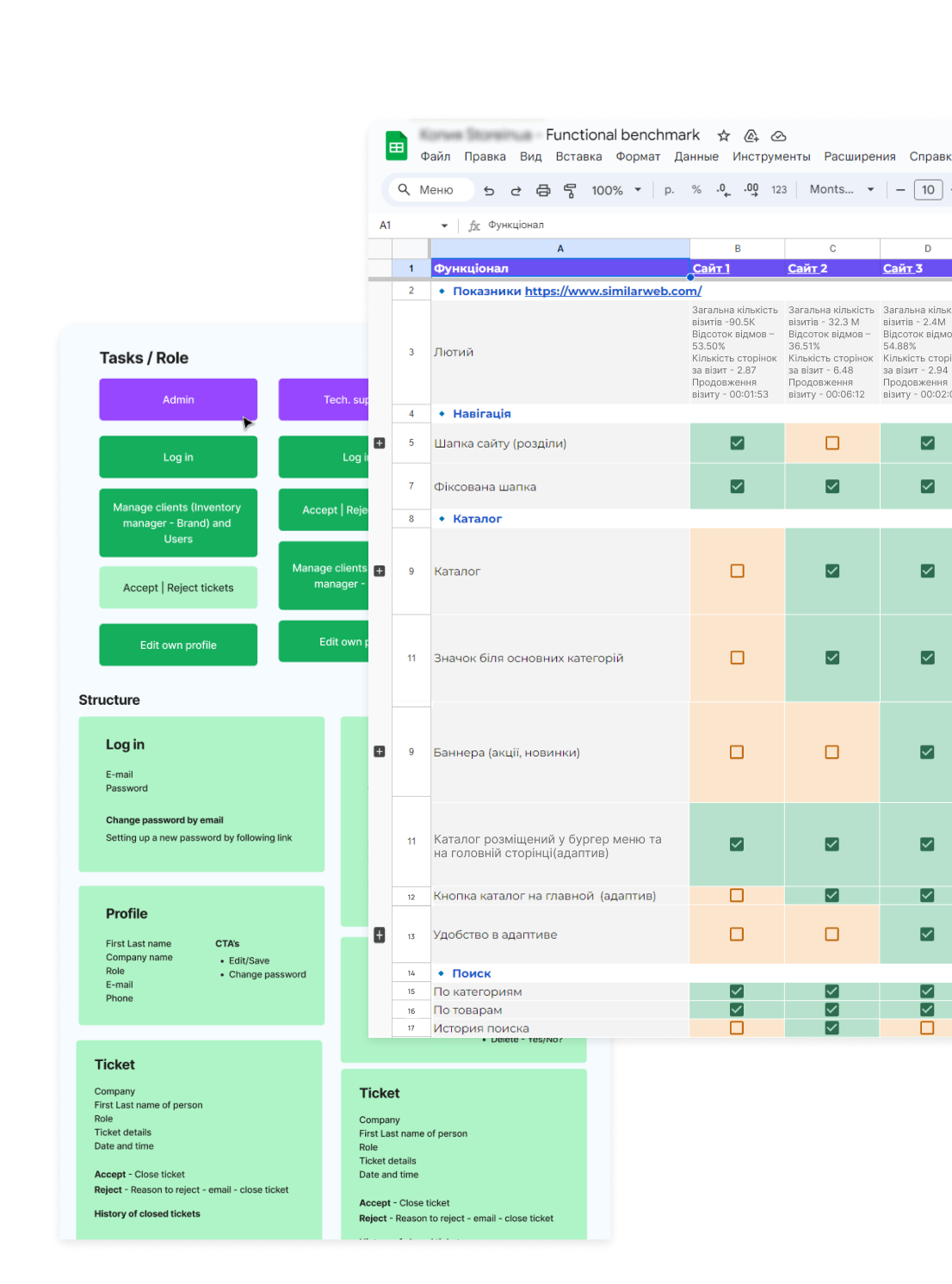
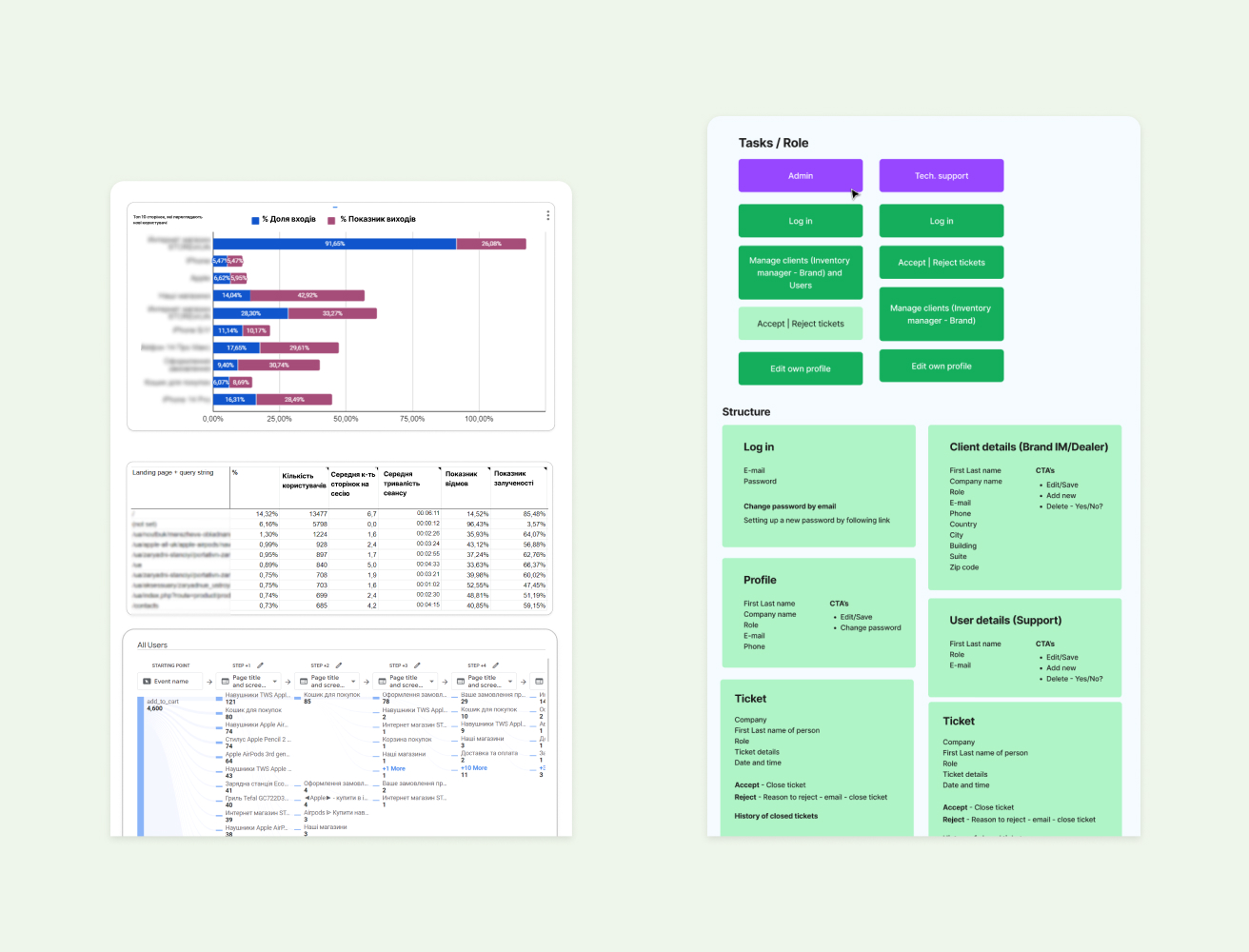
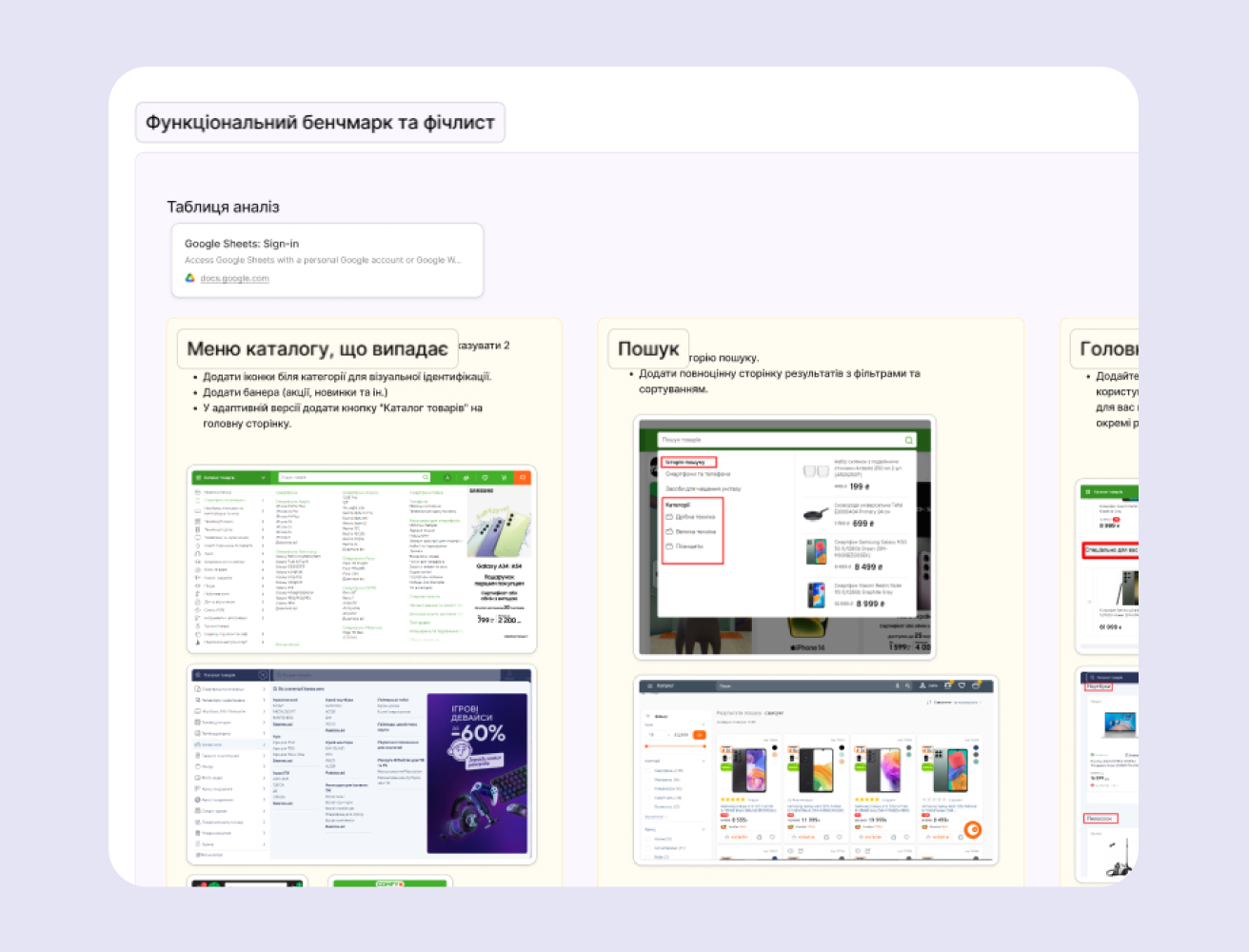
We help you choose the best approach for your business to stand out from competitors or create a product with no direct market analogues.
Competitor research can range from collecting screenshots of competitor features and user flows in Figma to a more detailed analysis focused on specific product characteristics.
3. Value Proposition development
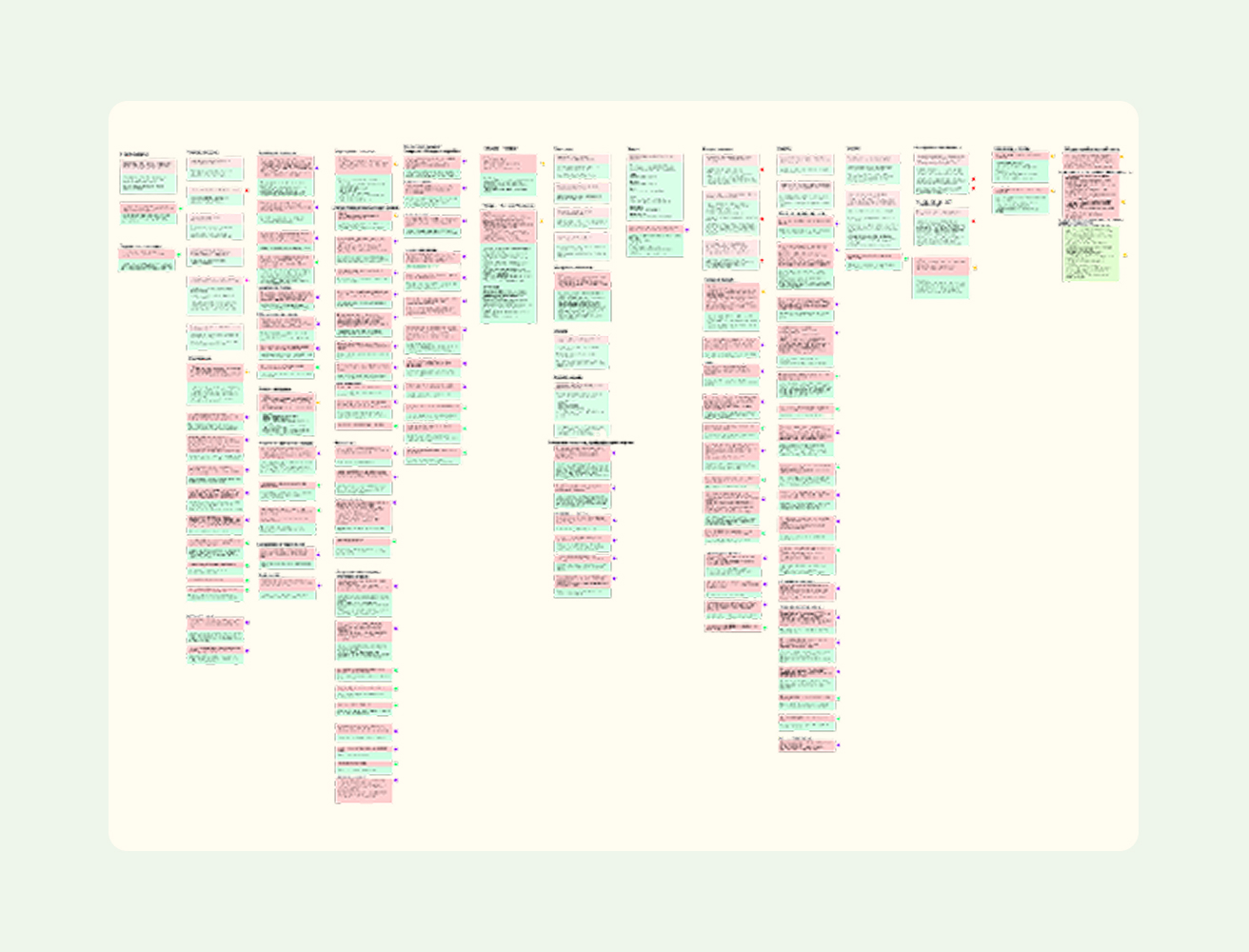
It looks like a simple, visual framework that clearly connects users, their problems, and your product’s value.
4. Product Vision Board
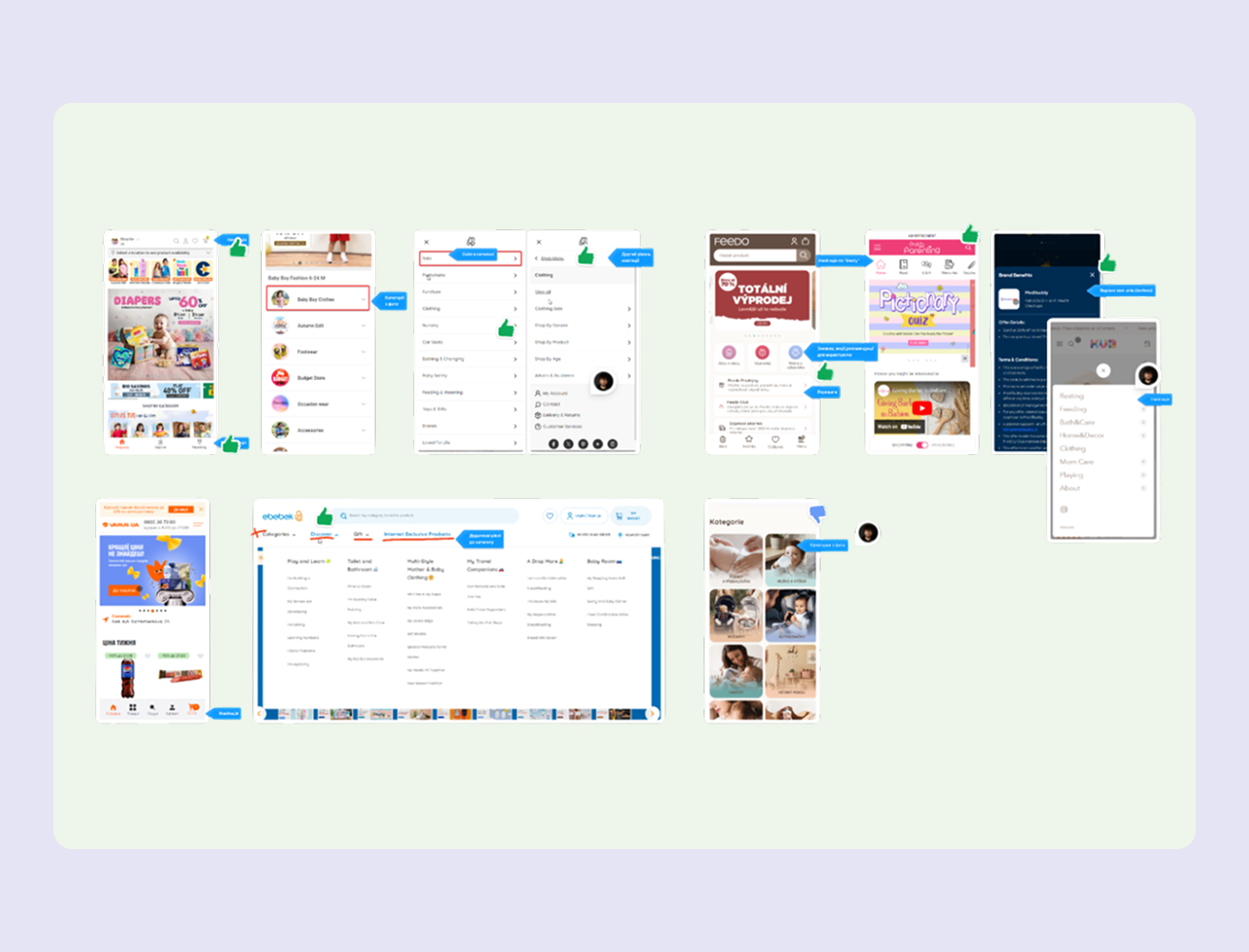
Based on real examples from similar projects, we create a Product Vision Board that shows how key features and page sections should work and be structured.
Our UX specialist explains how each solution works, why it was chosen, and why it fits this specific product — taking into account user needs, business goals, and technical constraints.
5. Customer Journey Mapping
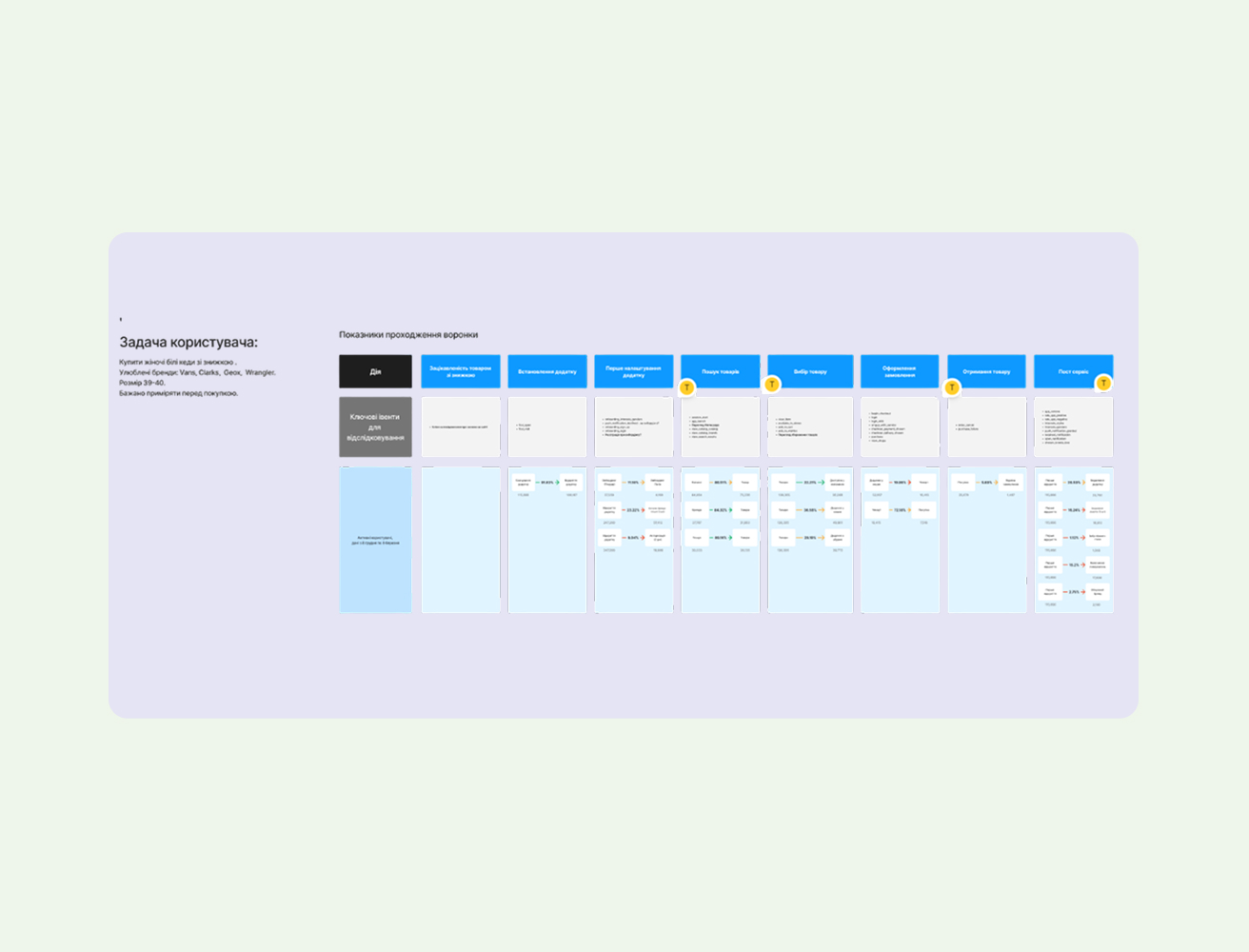
A visual map that shows how users interact with your product step by step — from their first touchpoint to the final goal.
It helps identify user actions, thoughts, pain points, and expectations at each stage, so we can spot friction, improve the experience, and design solutions that better support both user needs and business goals.
6. Information architecture
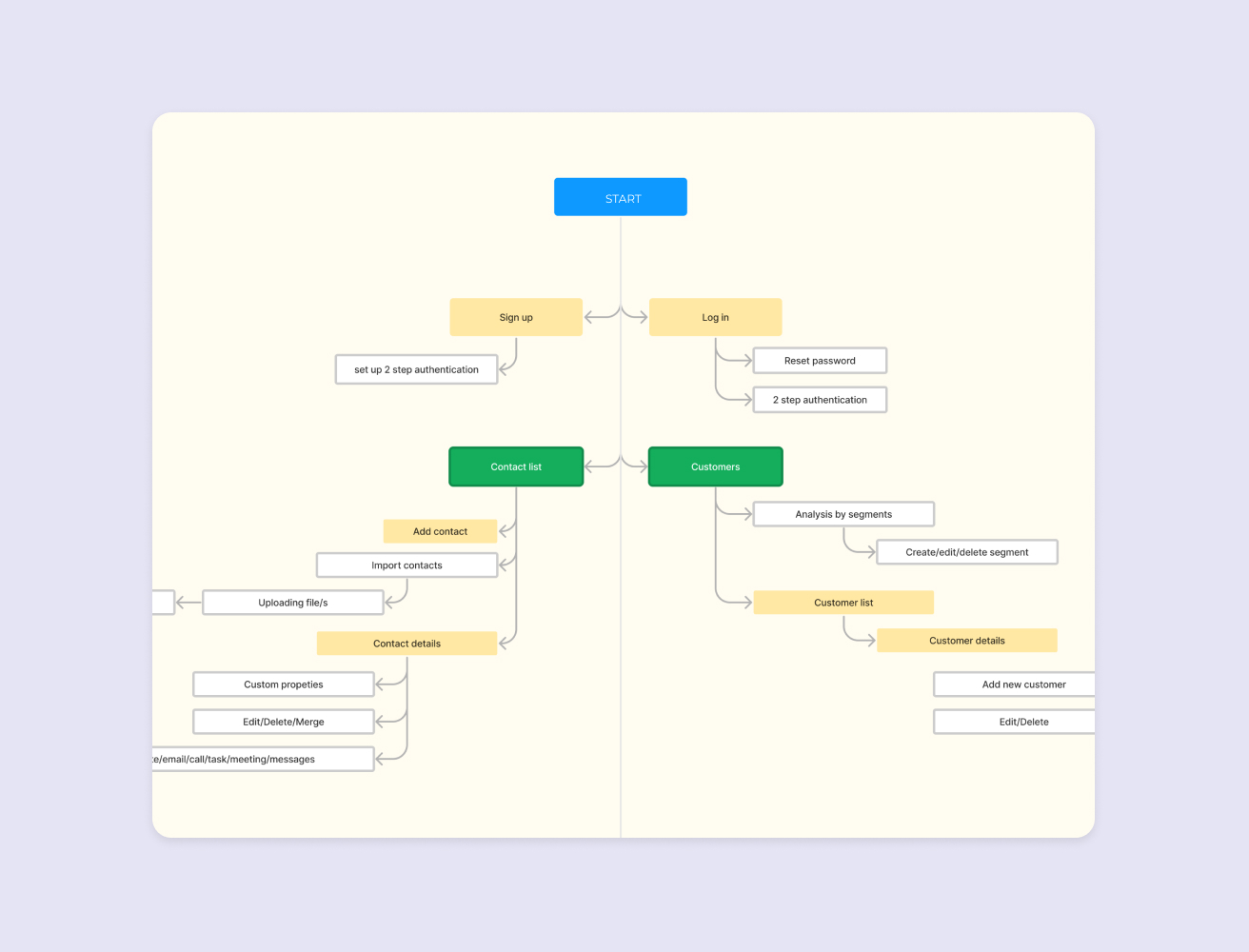
A simplified structure of the product that shows how pages, sections, and key features are organized and connected.
It helps define what goes where, ensures logical navigation, and creates a clear foundation for UX/UI design and development without getting into detailed layouts.
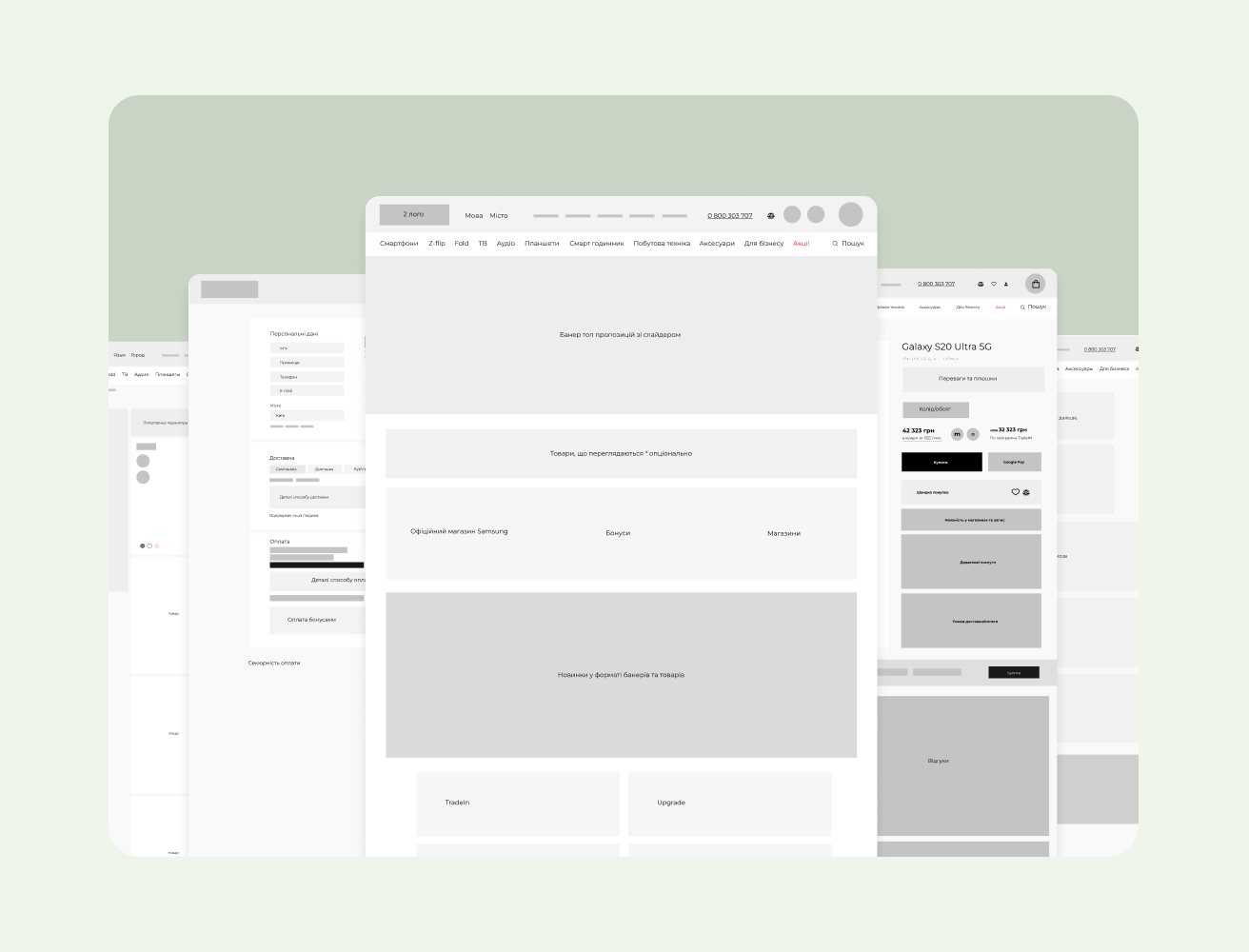
7. Low- and Mid-fidelity prototyping
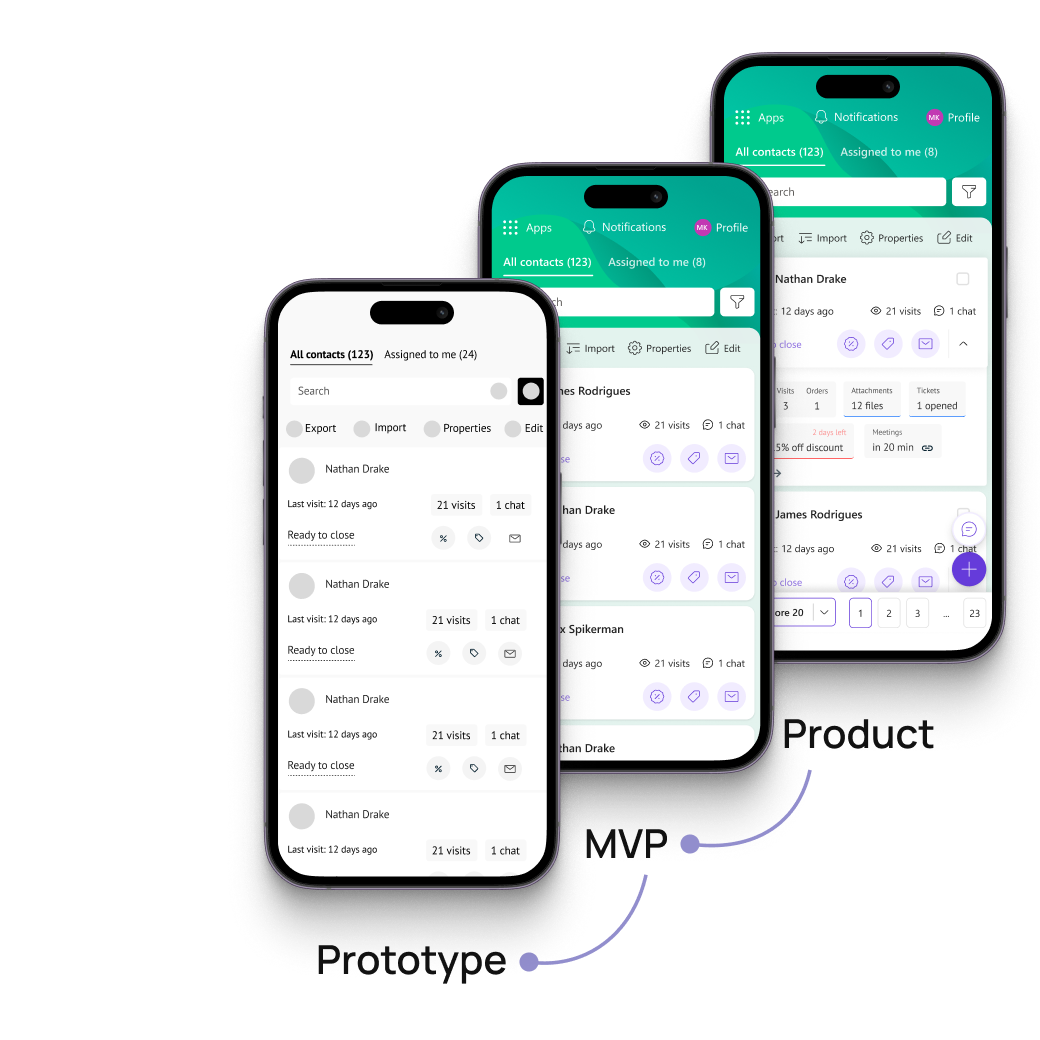
The process of creating simple and semi-detailed prototypes to visualize key screens and user flows before full design.
Low-fidelity prototypes focus on structure and logic, while mid-fidelity prototypes add more detail to validate usability, interactions, and functionality — helping test ideas early and avoid costly changes later.
8. Feature prioritization and MVP definition
The process of deciding which features matter most and should be built first is based on user value, business impact, and technical effort.
UX and technical specialists work together to finalize the MVP scope, taking into account all technical opportunities and limitations, so the product is realistic, scalable, and ready for development.
.png)
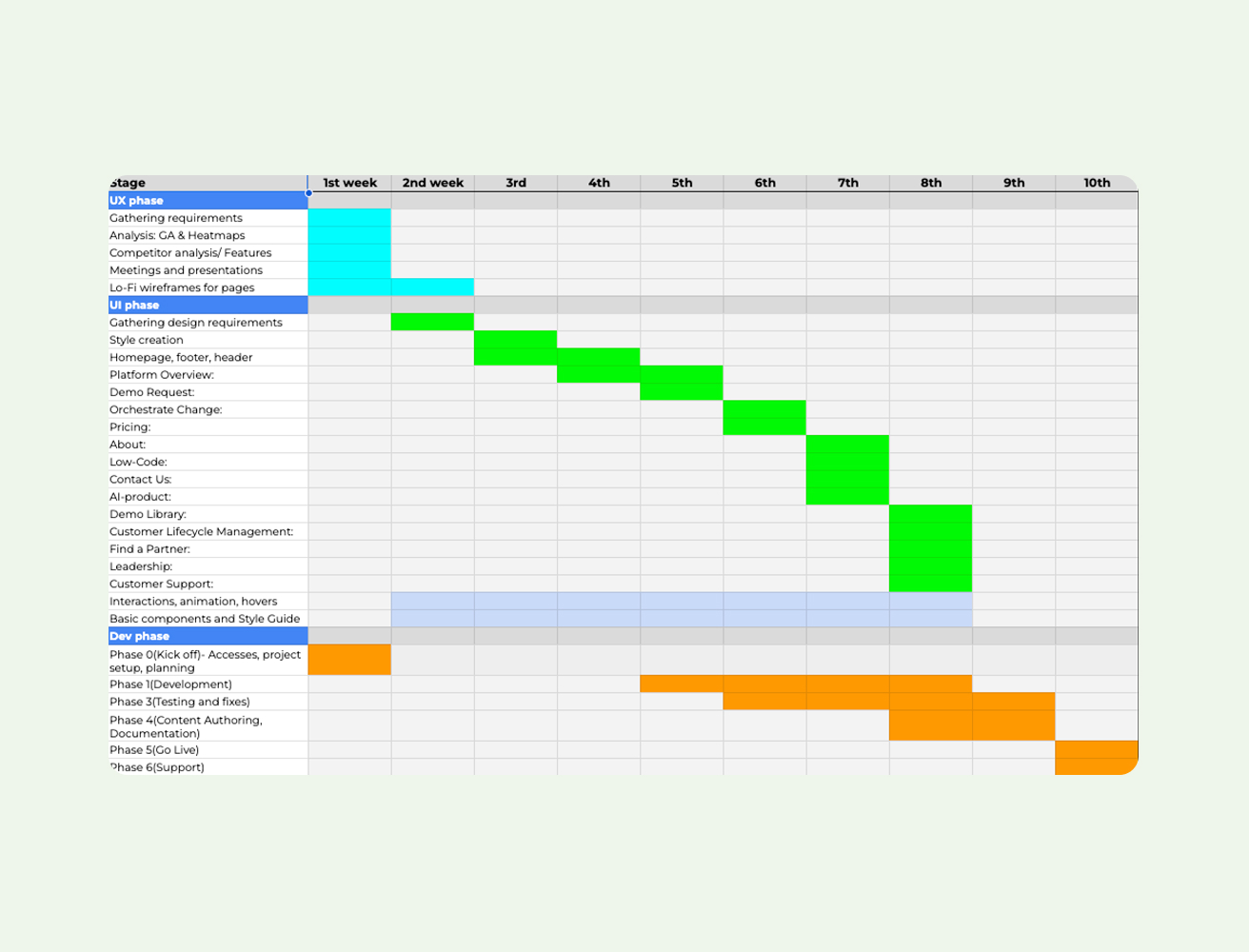
9. Product roadmap
A high-level plan that shows how the product will evolve over time — what to build first, what comes next, and what can be added later.
UX Discovery Phase Outputs: What Do You Get?
Deliverables
- General product concept and the storyboard of the key user flow
- Market and Competitor research
- Value Proposition Development
- Product Vision Board
- Customer Journey Map
- Information Architecture (Miro, Figma, etc.)
- Low- and Mid-fidelity prototypes (Figma)
- MVP features spreadsheet
- Product roadmap
Team & Duration
Team:
- You or a Product Owner (on your side)
- UX/BA specialist
- Technical expert
- Project Manager (if needed)
Duration: 1 week. In just 5 working days, we go from a rough idea to a structured product plan. Each day has a clear focus, with expert execution on our side and quick validations on yours.
Our awards & mentions
Senior UX experts for a strong product foundation
Senior UX specialists with 10+ years of experience lead our UX discovery services. We use a structured approach and internal knowledge-sharing system to ensure consistent quality aligned with Nielsen Norman Group principles, CX/UX best practices, and W3C standards.

Experience: 10 years
%20(1)%201.webp)
Experience: 7 years


Experience: 7 years
Frequently Asked Questions about UX Discovery Session
What is UX discovery?
UX discovery is the foundational step of product development where we align business goals, user needs, and technical constraints before detailed design or coding begins. Through thorough UX discovery research and an interactive UX discovery session (such as our one-day design sprint), we clarify the core product concept and define key user scenarios.
Ultimately, the UX discovery phase acts as a strategic bridge that turns a rough idea into a clear, validated product vision, preventing scope creep and wasted budget.
What is the discovery phase of a project?
The discovery phase of a project is a dedicated timeframe, which takes just 5 working days at Turum-burum, used to determine exactly what needs to be built and why. During the UX discovery process, our experts analyze competitors, develop a value proposition, and map out information architecture.
Businesses invest in professional discovery phase services to expose hidden technical complexities, define MVP features upfront, and secure realistic timelines and cost estimates before development ever starts.
What comes after the discovery phase?
Once the initial planning is complete, you are fully prepared to move seamlessly into the UI/UX design and development stages without any guesswork.
You will be equipped with concrete UX discovery phase outputs, which include a product vision board, customer journey maps, low- and mid-fidelity prototypes, and an MVP features spreadsheet.
This ensures that the insights gained throughout your UX discovery journey translate directly into a clear, actionable product roadmap for your tech and design teams.
Which companies offer discovery phase services?
Various digital agencies, software development firms, and specialized design studios provide UX discovery services to help clients validate their ideas. However, it is essential to partner with a team that has deep usability and technical expertise.
At Turum-burum, our senior specialists with over 10 years of experience lead the way. As an officially recognized Google UX Partner in Ukraine, we ensure your digital product is built on a strong, scalable, and user-centric foundation.
What clients say about us
Turum-burum aligned the client's marketing teams around CRO priorities and helped them execute practical changes in their online sales journey, resulting in measurable improvements in online sales. The team was professional, efficient, and punctual. Turum-burum's efficiency stood out.

I had an opportunity to collaborate with Turum-burum when trying to optimize our website and evaluate its UX. Diana and her team prepared a thorough analysis of the entire page. They not only assessed its general features but also checked how well it addressed the needs and preferences of our Web3 customers. This helped us a lot in determining the direction of the website's development.


With Turum-burum, the number of users has increased six times, the bounce rate has decreased by 17%, and the duration of mobile user sessions has grown by 32%. The team is timely, clear, and relevant in their communication. Moreover, they are genuinely interested in our project.


The Turum-burum team helped us to launch a brand-new Web 3 product to the market very fast. It took them less than a month to create all the design mockups and met all the deadlines. I liked the level of professionalism and way of communication they provided. There were no problems later with design implementation because a designer considered all the design elements and statuses in the mockup.

Turum-burum team supported our team at Reply very well in delivering personalization and conversion consulting to our enterprise customers and help us top scale up our delivery. The Turum-burum team integrated very good into our consulting team. Together we are working on delivering new optimization hypothesis, a/b tests, personalization campaigns, results reportings, QA with Optimizely and Adobe Target.


Highly recommend this web design agency! They delivered beyond my expectations. Denis is very experienced with eCommerce and conversion rate optimization. I got exactly what I was looking for.


The guys from the company Turum-burum delivered a great job on this project. Working within the timelines and being open to feedback meant that the end result was delivered in line with expectations. I would recommend it and will be working with it again.


I really enjoyed working with Turum-burum company and with Denys in particular! They were very easy to work and communicate with so naturally, our partnership led to successful results. His team is very diverse and skilled and helped us with many projects. Will definitely be working with Denise & the Turum-burum team on my next eComm projects!


Turum-burum's work drove an increase in the client's conversion rate and site traffic. Proactive and detail-oriented, this company took the time to understand all of the available data to provide optimal solutions and explanations for the client's problems. They were supportive and transparent throughout.

The work and deliverables have all been of great quality and satisfy the client. As a team, Turum-burum agency is reliable, consistent, and accommodating. Their accountable approach and dedication to providing strong work make them a great partner.


During a year of collaboration with Turum-burum agency, we managed to eliminate most of the critical errors both in the interface and in the logic of some of the site's functions. This allowed for growth in all main site metrics: ARPU + 71.43%, CR + 55.4%, and CR checkout + 128%.

We took a comprehensive approach to SEO together with TopDog & Turum-burum, with a particular focus on UX SEO and mapping user journeys. By analyzing how visitors navigated the site, rebuilding the information architecture, and optimizing both design and content, we increased traffic from Google by 30% and boosted our conversion rate by 25%. This resulted in our most successful season in terms of revenue ever.
Turum-burum conducted a comprehensive UX/UI audit of our website, focusing on identifying areas for improvement to increase lead form submissions from our target audience. They provided a detailed report outlining their recommendations for interface enhancement. They were prompt in attending to our requirements and requests, and their communication was clear and responsive.

Turum-burum's work improved our website's UX, making it easier for us to navigate. The team's design changes and recommendations were expected to increase our user engagement and conversions. Turum-burum delivered on time, guided us through the process, and helped us understand what to do.

After the analysis, Turum-burum provided us with an Excel sheet describing over 50 sources of friction and their possible solutions. The team identified all issues using data, numbers, and heat maps, reducing subjectivity. They were professional and friendly, communicated clearly, and delivered on time.

The Turum-burum are superior at ux audit. I am very satisfied with their hypotheses, reasoning, and timely service. They were very patient with us a growing start up and answered all of my concerns. I will definitely use them for annual ux audits for our business. I would prefer to use a separate UI designer, but their internal UI designer is still pretty good. Overall I would rate my experience 5/5.
Turum-burum provided us with a valuable UX audit report and identified our site’s main usability mistakes. The team delivered all items on time and communicated clearly throughout the project. They were responsive to our needs, and their data-driven solutions and proactive communication stood out.

Nothing but positive things to say about Denis and the Turum-burum team! Our project was delivered on deadline, all deliverables were met, and we were kept up to date as things progressed. We are very happy with the project and look forward to working with Denis again on future UI/UX and Market Research projects.

Turum-burum's work has helped us increase our project KPIs and improve our customers' platforms. The team successfully implemented design changes within the agreed budget and timeframe. Moreover, they were professional, responsive, attentive to details, and committed to excellence.
Turum-burum UI design agency delivered a well-structured, professional-looking website with all the relevant information about our business. I am pleased with their UX agency services, efficient project management, excellent customer service, high-quality outputs, attentiveness, and receptiveness to feedback.


Turum-burum UI design agency delivered a well-structured, professional-looking website with all the relevant information about our business. I am pleased with their UX agency services, efficient project management, excellent customer service, high-quality outputs, attentiveness, and receptiveness to feedback.

Get your discovery services
.png)

