


Project Discovery Phase: How to Save Your Project Budget Before It's Too Late
When planning to launch a new project or just renew an existing one, everything starts with estimating the budget. And when that budget is tight, the project discovery phase often feels like the easiest thing to cut, as it seems to be not such necessary thing… But is it so?
Let’s see the facts and real-life examples to find out if the discovery phase is a point you can cut the costs by refusing it or quite the opposite.
What Is the Discovery Phase of a Project?
The project discovery phase is the strategic stage that happens before design and development begin. Its goal is simple: align business goals, user needs, and technical realities to understand what should be built or changed and why.
Rather than guessing what users want, this phase relies on hard data, behavioral patterns, market realities, and business objectives. It answers critical discovery phase questions: Who is the primary user? What is the core problem we are solving? And does the project solve it? What are the technical limitations?
By answering these upfront, the discovery phase prevents scope creep, eliminates unnecessary features, and provides highly accurate cost and timeline estimates, ensuring your budget is spent only on what drives value.
5 Discovery Phase Steps That Prevent Months of Expensive Rework
A good discovery phase is not brainstorming. It’s a structured process designed to remove assumptions one by one before they become expensive development problems and act on the concrete data to achieve results faster in 5 discovery phase steps.
1. Workshopping: Before You Build Or Change Anything, Make Sure All Teams Are On The Same Page and Cut the Fluff
Ask the product owner, stakeholders, developers, UX/UI, and CMO what a product should do and look like, and you’ll often get five different answers. This isn’t a lack of vision. It’s a lack of alignment.
This is exactly why the strategic alignment workshop and USP definition stage exist. It helps teams define who the primary users are, what problem actually matters, which flow creates the most business value, and what the product truly needs in its first version or what needs to be fixed first in an existing project.
Without this step, feature lists grow endlessly because every request feels important. Discovery forces teams to narrow their focus instead of trying to build everything at once.
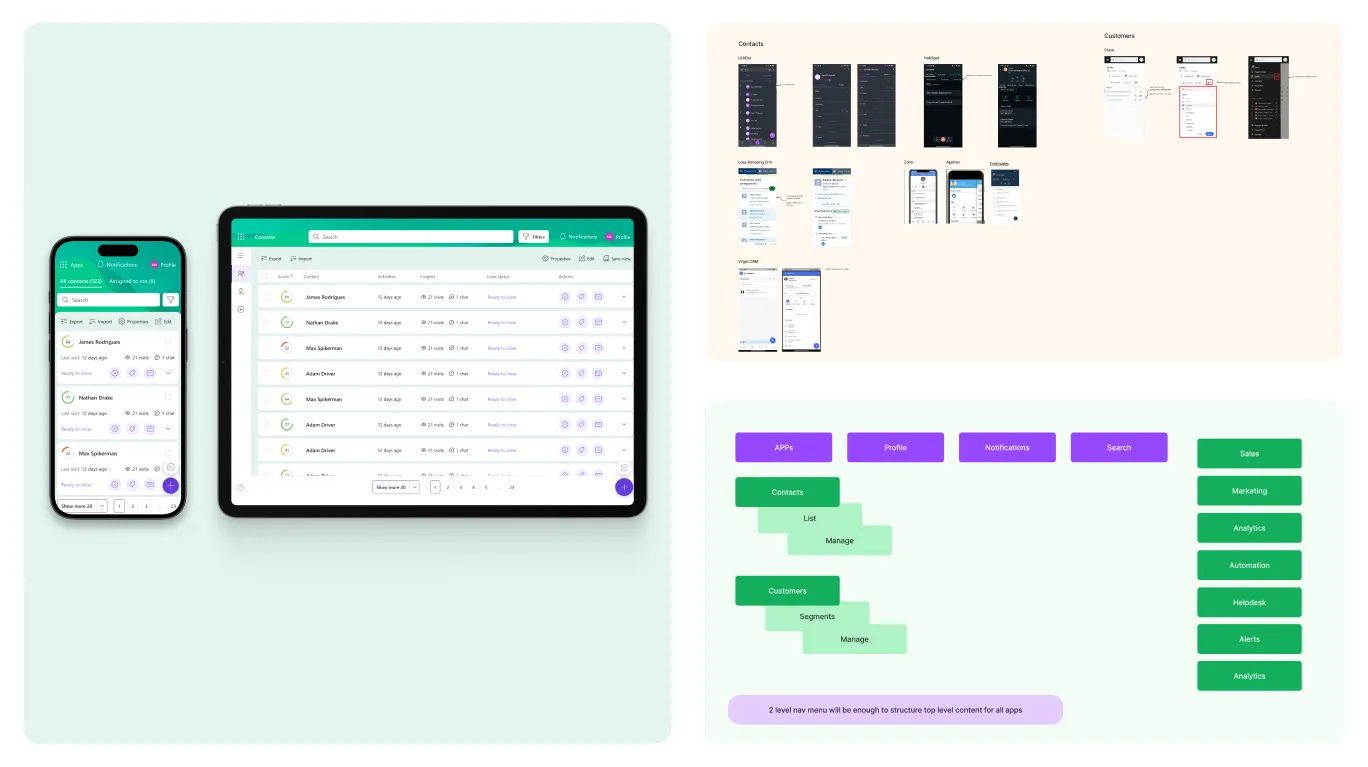
A good example is a CRM logistics platform with multiple user roles, operational flows, admin controls, and competing internal business requirements. The challenge wasn’t just making the system functional but making it intuitive for completely different types of users.
Early discovery sessions, USP clarification, and feature prioritization helped separate core functionality from secondary features, align teams around the key workflows, and focus the MVP on the actions users needed most often. That clarity significantly accelerated time-to-market.
So, the goal of this stage isn’t generating ideas or features. It’s eliminating the wrong ones. As every unnecessary feature delays learning.
{{block}}
2. Competitor and Market Research: Users Compare Your Product to Every Tool They’ve Ever Used
Users don't judge a product in isolation. They compare it to the navigation patterns they already know and trust. When products deviate from the expected pattern without clear reasons, innovation quickly becomes a barrier.
And that’s why during the discovery phase, market and competitor research is about much more than an analysis of features. It helps teams to understand what users expect from the category, what UX conventions feel familiar, and where differentiation makes sense.
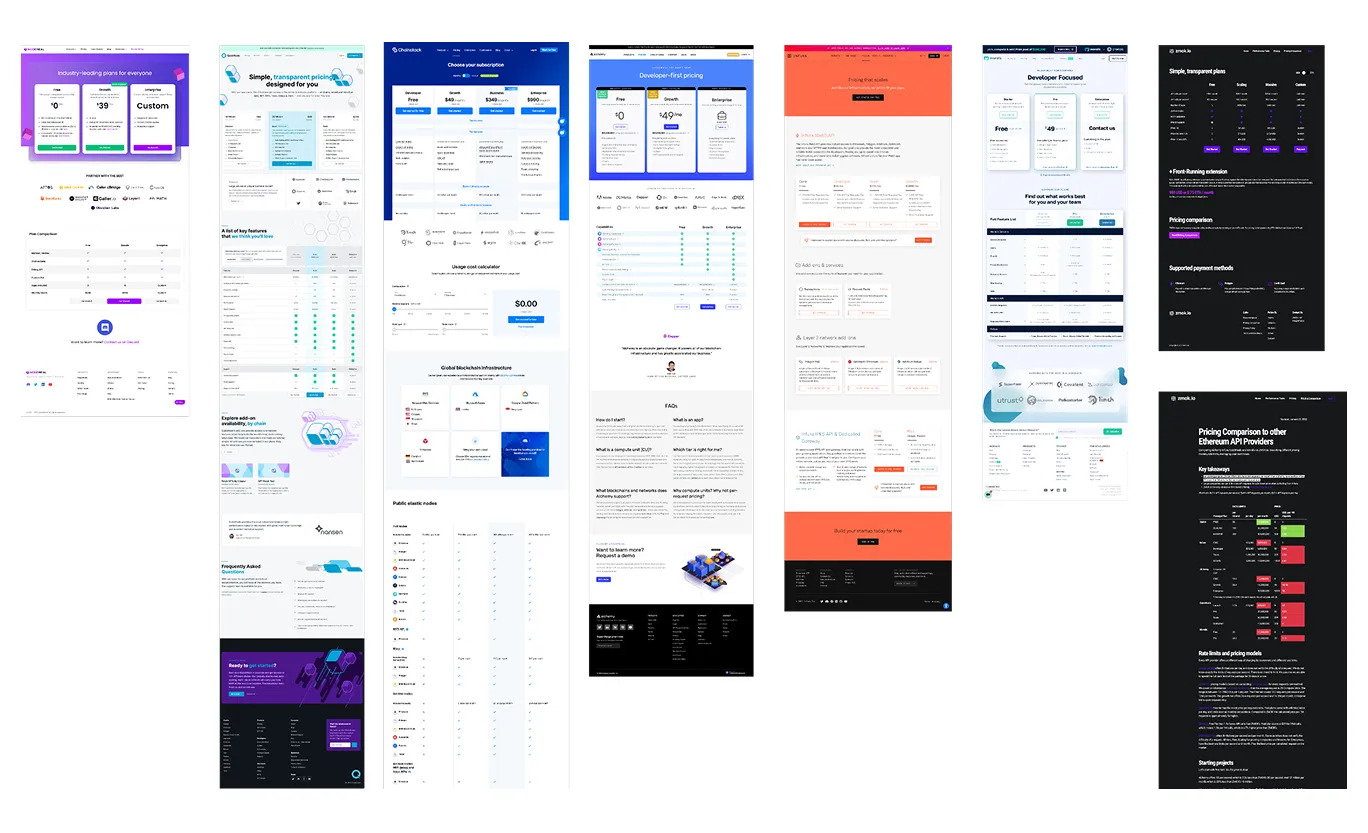
Another example is RPC Fast, a SaaS startup with complex functionality and strong competitors. The product was launched into a supercompetitive Web3 space with existing players like QuickNode and Alchemy.
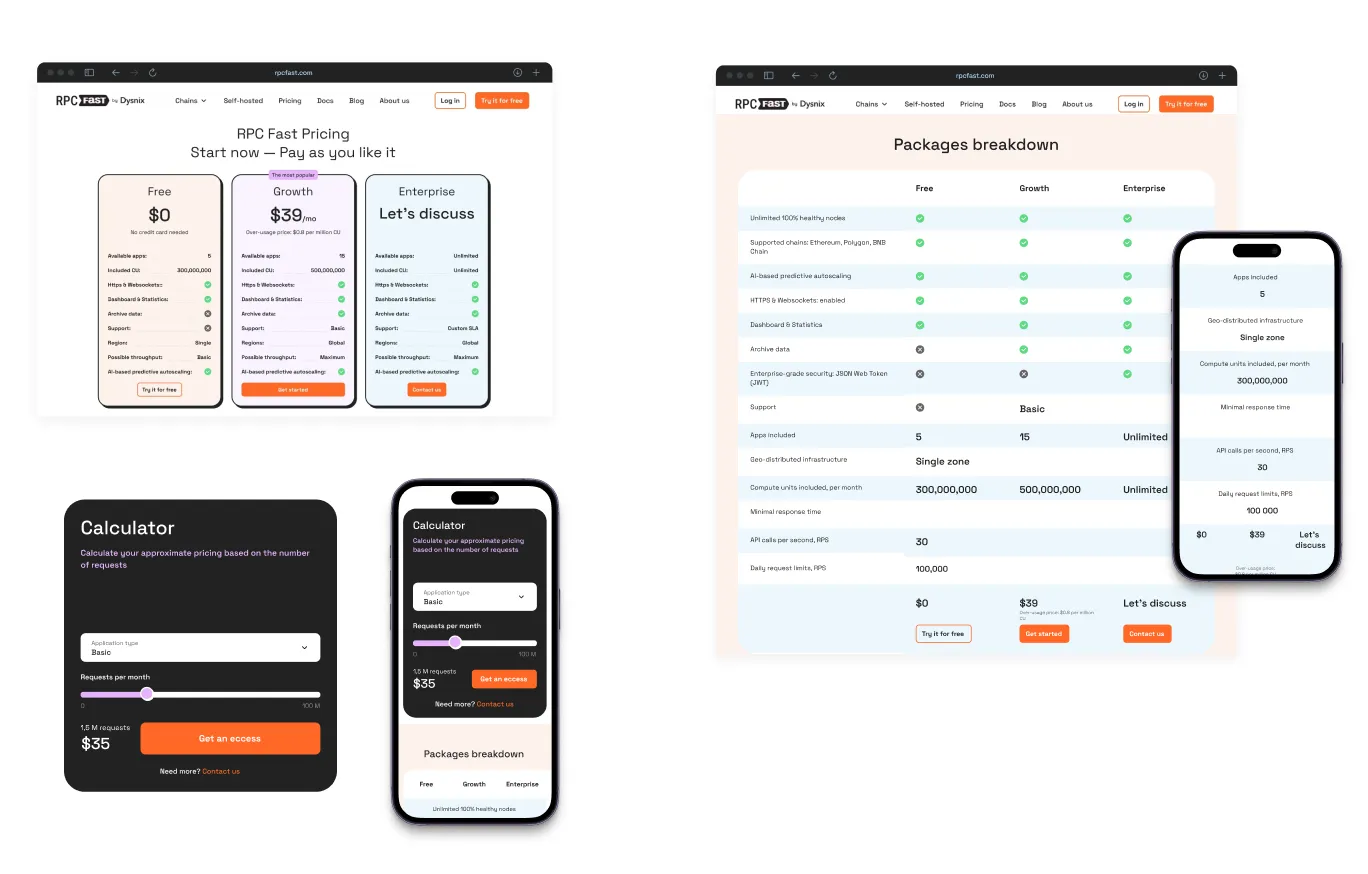
Research showed that most competitors have complex interfaces and pricing logic, use technical language, and orient toward tech-savvy users. At the same time, RPC Fast had to communicate a technically sophisticated product to a diverse audience that included developers, startups, and enterprise clients.
Instead of reinventing interactions for the sake of originality, the focus shifted toward clarity: simplifying navigation, making key product benefits immediately visible, structuring content around real user decisions, and even implementation of a pricing calculator to explain the logic and make costs more transparent.
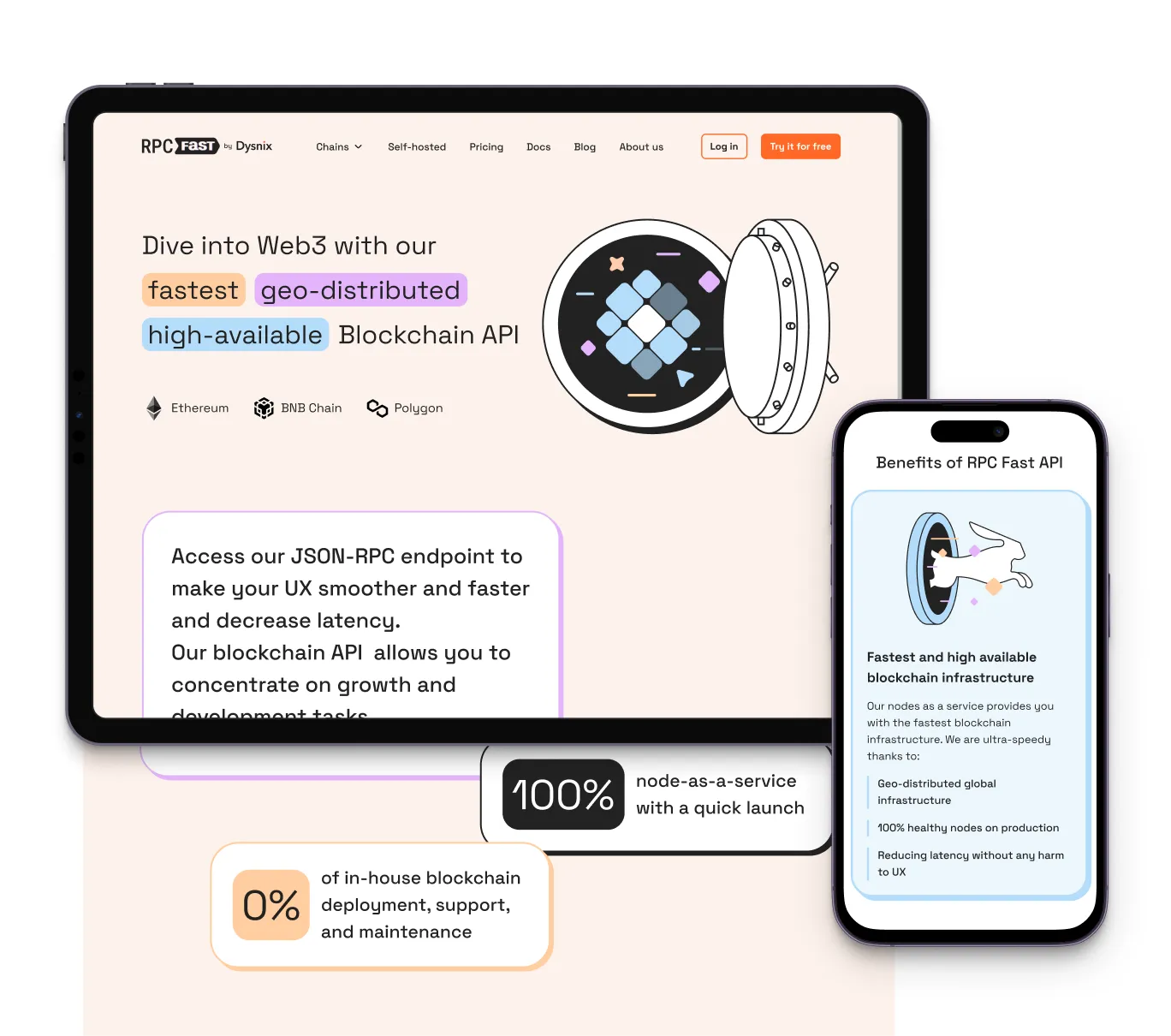
Competitor analysis also helped identify opportunities to differentiate visually through a cleaner 2D style and stronger emphasis on trust, security, and usability.
3. Information Architecture Optimization: Beautiful UI Cannot Fix a Broken Product Structure
Most UX problems are structural, not visual.
Navigation that loses users, messy category pages, or flows that create hesitation usually point to deeper issues: weak information architecture, unclear hierarchy, and broken customer journeys. Redesigning only the visual layer may make the product look better, but it won’t fix how the experience actually works.
This is exactly why customer journey mapping and information architecture become critical during the discovery phase. Analytics can show where users leave. Discovery helps uncover why they leave and what creates uncertainty, friction, or negative emotions before the conversion even happens.
That's what helps the Samsung Experience Store redesign be effective, not just fixing aesthetics. Before moving into design, the project included a full discovery phase with usability audits, workshops, and interviews to better understand how users interacted with the brand both online and offline.
Based on customer journey mapping, the team identified friction points that complicated the purchase flow, created unnecessary decision fatigue, and negatively affected the user experience.
.webp)
Information architecture and prototypes were then rebuilt around real customer behavior to simplify navigation, structure content more intuitively, and help users reach products faster even during their first visit.
.webp)
4. Prototyping: Wireframe Mistakes Are Cheap. Production Ones Aren’t.
Prototypes are not early versions of the final product. They’re tools for validating logic before development makes changes expensive.
Low- and mid-fidelity prototypes help teams test navigation, flows, role-specific interactions, and assumptions while changes still take hours instead of weeks.
Skipping this step in the name of speed usually creates the opposite effect: the first real UX testing happens during development, when every correction affects timelines, budget, and technical architecture.
Let's take a complex platform like NFTrends that combined blockchain technology, luxury products, and digital art but had no direct market benchmarks to rely on. The challenge was not only designing four different user flows for business owners, inventory managers, dealers, and buyers, but also making a technically complex product understandable for users outside the Web3 space.
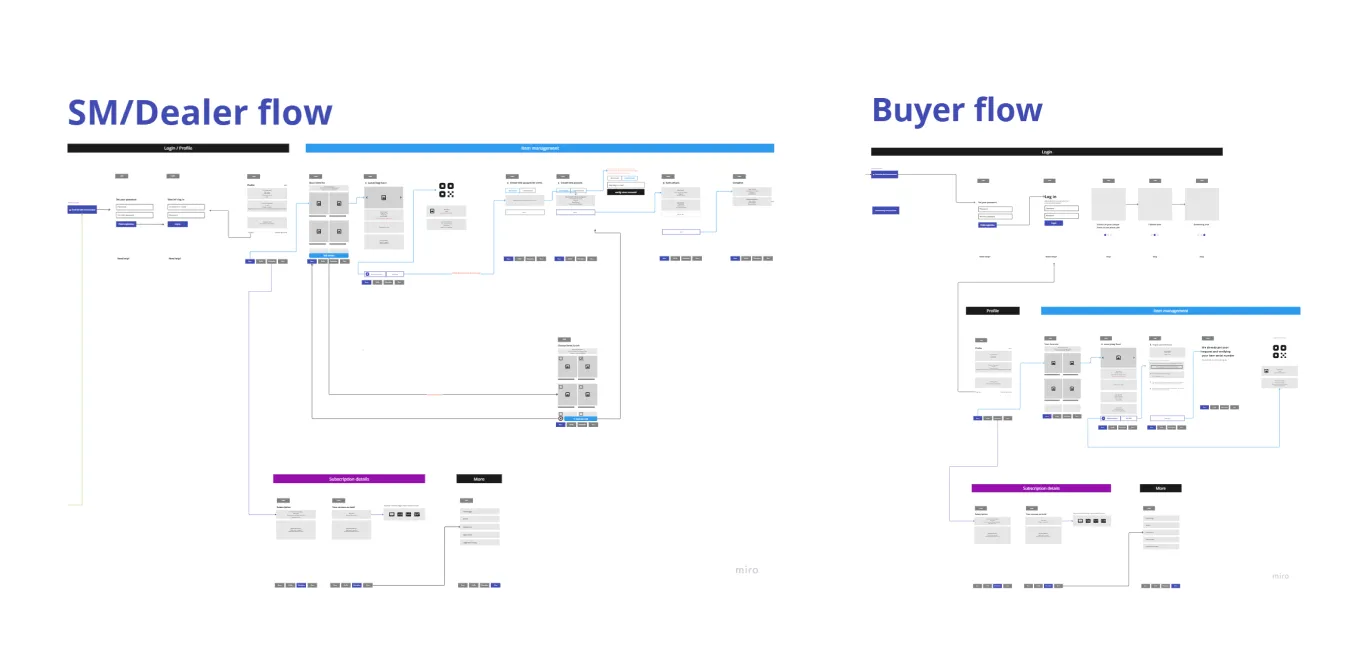
The prototyping helped test how different audiences interacted with the platform and identify the potential barriers so that the designers could simplify complex flows and adapt the experience to both luxury and art audiences before development started.
5. Strategy Building: The Best Products Are Designed for Evolution, Not Perfection
A product roadmap isn't a delivery schedule. It's a theory about how a product should grow, what gets built first because it's foundational, and what gets built later. You add features not because competitors launched something new or because they seem like good ones to have.
With a plan of validated features, you can cut costs and reduce time-to-market by focusing on what matters now and here, gradually adding features to improve the user experience while maintaining design consistency.
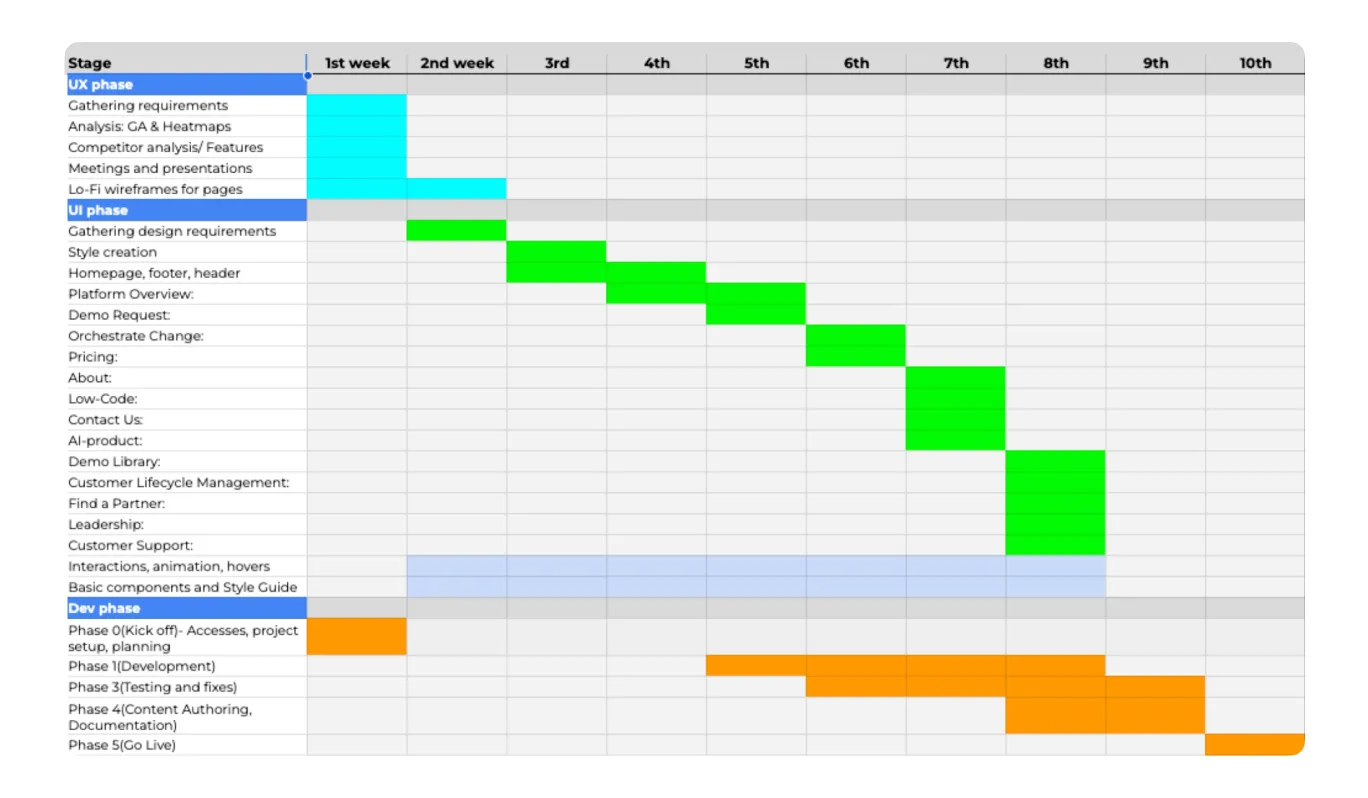
Discovery Phase Deliverables Or Why This Stage Is So Vital To Cut Project Costs
At the end of the discovery phase, businesses don’t just get prototypes, diagrams, or research files. They get clarity.
Businesses get a validated product concept, clear MVP or redesign scope, user flows, prototypes, information architecture, UX recommendations, and a roadmap that helps teams understand what to build, what to postpone, and where risks hide before development starts.
In practice, that means fewer redesigns, more accurate estimates, faster development, and significantly lower chances of wasting budget on the wrong functionality or hypothesis.
What Comes After the Discovery Phase in a Project?
What's next? Design and development with a validated foundation and solid data.
Designers work from a defined structure. Developers receive a scoped brief with tested logic. Stakeholders have seen and approved prototypes before production starts, so there are no late-stage surprises. All estimates are grounded, making it easier to control the process for all teams.
In short, it's the same teams doing the same work but faster, with fewer revisions, and building the right thing from the start.
{{block}}
Project Discovery Phase Or What This Pre-Work Actually Gives Businesses
Whether it’s the IT project discovery phase, the software development discovery phase, or the e-commerce project discovery phase, it is often perceived as an optional step and something businesses can skip to launch faster.
In reality, the discovery phase is not an extra cost. For new products, it's the risk management stage, when assumptions can still be tested before they're expensive to act on. For existing products, it's the diagnostic stage — the analysis that separates the real problems from the symptoms and gives the redesign a clear brief instead of a vague mandate to "make it better."
There is exactly one stage in product development where mistakes are still cheap to fix. That's discovery. Every stage after it gets more expensive.
Certainly, a strong discovery phase doesn’t guarantee product success. But it dramatically reduces the chances of building a product that users neither need nor can use.
FAQ
What is a discovery phase?
It's a stage of research and planning, where cross-functional teams define the product's scope, business goals, user needs, competitors, and technical requirements before moving into design and development.
How long is the discovery phase?
At Turum-burum, the discovery phase takes five working days. During this time, we do strategic alignment through research, architecture, prototyping, and create a project roadmap. All that is done in a format that keeps business stakeholders involved without requiring their constant presence.
Which companies offer discovery phase services?
Discovery phase services are typically offered by specialized UX/UI and CRO agencies like Turum-burum or full-cycle software development companies that have enough expertise and experience in creating or optimizing interfaces, apps, websites, etc.
Question reference
Answer reference









More real-world Turum-burum cases?
Review our vast portfolio of cases in a variety of business fields to make sure of our expertise.
Go to Portfolio
